Engagement: Creating Innovative and Intriguing Learning Experiences for Students

In today’s tech-dominated society, almost every aspect of our lives has become digitized in one way or another, and the wide-reaching influence of electronic advancement has had a severely impactful effect on the profession of education as well. When teachers are tasked with educating students who have grown up immersed in technology since the day they were born, the age-old methods of instruction are no longer applicable. Nowadays, teachers must look to the mediums that students most actively interact with in order to best formulate activities that capitalize on prior learning and add to educational progression.

Despite the fact that the truth is staring us straight in the face, some teachers remain hesitant to fully acknowledge the significance of the omnipresence of technology. There remains a very common “general distrust of the machine,” since a “preference for the non-technological still characterizes [the teaching] community” (Selfe 412). Even when persuaded or forced by school boards to integrate technology in the classroom, a disconnect is ever apparent. Just because one is “using computers – or having students do so,” they may not be at “the point of thinking about what [they] are doing and understanding at least some of the important implications of [their] actions” (Selfe 414). However, teachers simply have to cultivate this understanding of technology, or they risk creating dire consequences for students as they embark on adventures in the real world. Whether we like it or not, there has been an increased “technology-literacy linkage into the country’s workplaces and homes” and “the linkage is strongly correlated to both race and socioeconomic status”; when so many jobs require technological experience and expertise in this day and age, education has to serve as the great equalizer to make sure everyone receives the same basic knowledge (Selfe 420). As institutions responsible for exposing burgeoning learners to intelligence required for success in society, it’s not a matter of if schools should integrate technology into the classroom – it’s a matter of when. After all, “if written language and literary practices are our professional business, so is technology” (Selfe 431).

After teachers make the jump to exposing all students to every facet of technology, this will alter how we approach instruction as a whole, since students will start processing and interpreting information in novel ways. This brings me to my next point; at the end of the day, it’s not just the integration of technology itself that counts – it’s the deeper analysis of just why technology has become such a dominant force in our culture and what benefits these products (or activities that involve qualities of these products) hold for education. How do we isolate the best elements of technology and spread them to every area of the curriculum?

One such suggestion for applying the strengths of modern-day technological tools to the classroom has come in the form of “gamification”. Gamification is the “use of game design elements in non-game contexts,” and it can commonly include “[taking] the scoring elements of video games, such as points, levels, and achievements and [applying] them to a work or educational context”; the end goal of gamification is meant to “increase the use of a service and change behavior” as “users work towards meeting [educational] goals to reach external rewards” (Nicholson). With the explosive popularity of video games over the past two decades and the novel ways of interacting with such digital experiences (such as virtual reality), gamification appeals directly to the modern-day sensibilities of many adolescents. However, a few concerns have arisen over adopting the tenets of gamification for educational instruction. Most notably, some take issue with gamification’s focus on external rewards, which seemingly reduces an individual’s internal motivation, since “once you start giving someone a reward” for a behavior, “you have to keep her in that reward loop forever” (Nicholson). This is no doubt a valid point, especially as many schools try to find ways to divert students’ attention towards authentic engagement with learning and away from an unhealthy preoccupation with grades.
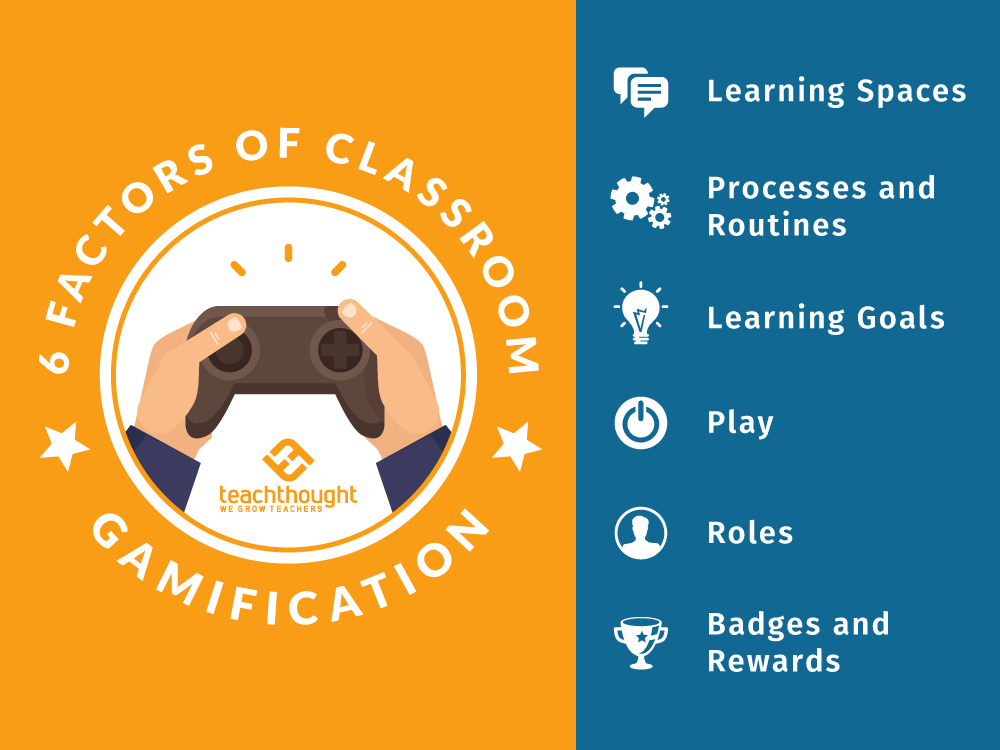
(Mitchell)

Some theories have been posed in order to ease these concerns associated with gamification. The organismic integration theory proposes that, if “there is less external control that goes along with the adaptation of an activity,” (i.e. if teachers don’t force a set activity on students and instead offer multiple options) “the activity will be more self-regulated” (Nicholson). Basically, this means that students are less likely to become solely focused on prioritizing external rewards received from an activity over internal motivation of completing the activity if they are allowed some say in how the activity is executed. Situational relevance must also be taken into account when experimenting with gamification. This concept expands on the organismic integration theory and states that “when someone else creates goals for a user… there is no way to [be certain that] these goals are relevant to a user’s background, interest, or needs”; therefore, “by involving the user in the creation or customization of the gamification system, the user can select or create meaningful game elements and goals that fall in line with their own interests” (Nicholson). Situational relevance also leads directly into the universal design for learning, an instructional theory that concerns how material is presented in class and how students are able to demonstrate knowledge of this material. If it’s required that students only “demonstrate their mastery of an activity in one way” the game at hand will not meaningful to each and every learner, so variation must be explored and allowed (Nicholson). Sometimes there are indeed constraints on certain learning goals that must be attained by the end of an activity, but this is why it’s important to offer students many different ways to display the way they meet such goals. All-in-all, every single one of these concepts or theories comes to the same conclusion: “meaningful gamification is the integration of user-centered game design elements into non-game contexts” (Nicholson). 

Because gamification is a relatively new instructional method with its fair share of controversies, several myths have sprung up over the past few years. For starters, gamification and game-based learning are not the same thing; while “game-based learning uses an actual game to teach knowledge and skills” and “is often used as a one-time instructional event,” gamification “only uses game elements” and its “content is usually distributed over time, and is not meant to be learned in one setting” (Kapp 44). Though the title of the concept seems to imply that students would be literally involved in playing one set game, gamification rather just takes bits and pieces from game constructs and applies them to overarching lessons to increase student engagement and involvement. Another misconception about gamification centers around claims that there is no science behind the concept, which is an entirely misguided statement when taking into account the learning practices of retrieval practice and spaced retrieval that play into these activities. When gamification is integrated into lessons that are spread over time where “learners receive content on a daily or weekly basis and are quizzed in that content with some additional game elements, the effect is long-term retention and knowledge application,” thus proving that there is scientific backing to support this procedure (Kapp 45). Finally, the idea that gamification is only about the implementation of points, badges, and leaderboards is entirely unfounded. Simply put, “the most effective gamification efforts include more than points and badges – they contain elements of story, challenge, and continual feedback as well as a high level of interactivity”; ultimately, these elements prove to be the more favorable aspects of gamification despite the prevalence of points-systems (Kapp 52).

BreakoutEDU has become one of the most unique gamification efforts in recent memory. BreakoutEDU is “an immersive games platform” and a “collaborative team-building experience” that builds on the “growing popularity of escape rooms, which challenge players to ‘break out’ of their surroundings using clues and puzzles” (Detwiler et al. 62). Most often, BreakoutEDU lessons require students to embark on an exciting and stimulating adventure centered around a class lesson, allowing students to teach themselves new materials and better understand novel topics along the way. As students are forced to engage with a set storyline and decipher clues to complete puzzles, they are “[given] a chance to practice ‘failing better,’ [rewarded] for their perseverance, [allowed to utilize] research as inquiry, and [forced to] demonstrate that it takes everyone’s contributions to succeed” (Detwiler et al. 64). The group component of the BreakoutEDU activity is especially important, as it forces students to consult classmates for assistance on educational matters and allows for ample opportunities for cooperation and combining knowledge. Because of the many benefits of BreakoutEDU activities – including pushing students to “examine a topic from multiple perspectives, persist through a difficult topic, use a variety of research strategies, and take risks as thinkers and writers” – it is clear that gamification not only works at involving today’s adolescents in their education, but it also prepares students to tackle real-world problems far more than any old lecture format.

BreakoutEDU does a great job at outright demolishing the stationary format of many classrooms in today’s world as well. These “movement-based activities” readily “encourage students to get out of their seats” and feel out problems instead of tirelessly tearing apart information in their minds (Rouse 554). Moreover, these escape-room-esque events aren’t simply time for play and posturing. Solving puzzles requires “patience and focus on individual tasks” and “players [have] to take the time to evaluate each clue meticulously, work through possible solutions, and eliminate irrelevant information” (Rouse 556). BreakoutEDU may be a more “fun” in-class experience than students are used to, but it’s certainly still hard work. Classroom environments commonly experience positive evolution after BreakoutEDU tasks as well, as teams must “[communicate] well” and “acknowledge and affirm” one another to succeed (Rouse 557). In addition, BreakoutEDU increases an individual’s resilience due to the challenging construction of certain endeavors. Due to the “limited time frame for completing certain games”, BreakoutEDU features “an element of intensity and competition,” and it is this added stress that pressures students in a positive manner to commit wholeheartedly to the work at hand and push through any roadblocks (Rouse 559).

Though BreakoutEDU may seem like a complicated concept to implement in everyday classrooms, there are an array of resources available on the Internet to offer assistance, and the “rules” for developing these activities are quite simplistic. Because “good game design” goes hand in hand with “good lesson plan design,” there really isn’t much of a difference between average instruction and gamification, and as long as one makes sure to “work backwards to design puzzles after defining learning objectives” and consciously “scale the level of challenge in each successive puzzle”, the tasks should be easily manageable and accessible for students (Rouse 561). Activities may have to be altered for set students or certain classes, but these accommodations are a staple of everyday lessons as it is. Finally, one must remember to always include a debrief to “help students reflect on what they have learned” throughout a BreakoutEDU activity and tie these puzzles to the overarching lesson at hand (Rouse 562).

Technology is inescapable in 2019, and that statement applies to classrooms as well. It is our duty to prepare each and every student of every background for the requirements of the real world and that involves technological literacy. As we integrate more and more technology into the curriculum, this will naturally change our students’ information-processing methods, and this development will spur further adaptation in educational instruction. We have to respond to the evolving mindsets of our students, and gamification is one of the best ways to take tenets of technology and use these elements in a playful yet productive manner that benefits learning for all.

Works Cited

Detwiler, Susan, et al. “BreakoutEDU: Helping Students Break Out of Their Comfort Zones.” College & Research Libraries News, vol. 79, no. 2, 2018, pp. 62-66.

Kapp, Karl. “Gamification: Separating Fact From Fiction.” Chief Learning Officer, vol. 13, no. 3, 2014, pp. 42-45.

Mitchell, Nellie. “6 Factors Of Classroom Gamification.” TeachThought, TeachThought, 2019, https://www.teachthought.com/learning/6-factors-of-success-in-gamification/.

Nicholson, Scott. “A User-Centered Theoretical Framework for Meaningful Gamification.” Games+Learning+Society, 2012.

Rouse, Wendy. “Lessons Learned While Escaping From a Zombie.” The History Teacher, The Society for History Education, vol. 50, no. 4, 2017, pp. 553-564.

Selfe, Cynthia L. “Technology and Literacy: A Story about the Perils of Not Paying Attention.” College Composition and Communication, vol. 50, no. 3, 1999, pp. 411-436.

New Literacies, Multiliteracies, and Multimodality: Pushing Ourselves and Our Students to Interpret and Present Information in Multiple Dimensions

Though many feel overwhelmed by the increasingly complex and varied presentations of mass media in the 21st century, it’s important to remember that mass media has been rapidly evolving since the 18th century, and each major change was met with similar resistance before individuals truly came around to embrace and understand the new capabilities of these advancements.

Despite the fact that “written text was [the] pervasive source of knowledge” for over “half a millennium or longer,” photography and illustration soon began to add an entirely new form of representation to the practice of spreading information (Cope and Kalantzis 361). With illustration, consumers of media didn’t simply have to read and write when it came to digesting or circulating the news; they could add a visual component to their exchanges that allowed participants to actively see the events being described. With the invention of “analogue telephones and radio,” audio added yet another dimension to the discourse of news, “as sound was made from the same bits and bytes as image and character” (Cope and Kalantzis 361). Individuals could receive reports from the comfort of their own home without ever having to go out and pick up a newspaper or magazine at all. However, it wasn’t until the rise of television in the 1950s that “truly integrated multimodal media [emerged],” as this technology allowed for communication to combine text and visuals and audio for a truly dynamic and immersive experience (Cope and Kalantzis 361). With televisions, everyday citizens were able to read, see, and hear their news simultaneously. This was a shock to the system for sure, but the next step would further radicalize the world of news consumption. When the Internet exploded onto the scene in the mid 1990s, this event contributed to a “blurring of boundaries,” as new “spatial and architectonic metaphors associated with site navigation” came into play (Cope and Kalantzis 362). The Internet added the element of interaction with news media. We no longer had to sit back and blindly consume information from our televisions; now, we could actually work with our screens.

With all these technologies, pedagogy has grown increasingly complicated for educators. When experimenting with new ways to present information and instruct a classroom, there are plentiful opportunities for multimodal interaction at our disposal, but many teachers routinely stick to the traditional lecture and PowerPoint methods. Their refusal to diversify their instructional strategies comes not from a place of disdain for novel technological capabilities, but from a place of ignorance. Because “traditional literacy does not by and large recognize or adequately use the meaning and learning potentials inherent in different modes and the synaesthesia involved in shifting between one mode or another,” many teachers refuse to stray from these age-old habits, favoring what is known (“the monomodal formalities of the written language”), over what is foreign (Cope and Kalantzis 363). Nevertheless, if we are to be the best educators possible for our students, we must seek to first understand the ways this generation interprets and receives information and then subsequently adapt to these synaesthetic tendencies. After all, “in a very ordinary, material sense, our bodily sensations are holistically integrated” (Cope and Kalantzis 363). 

In addition, it simply does not make sense to continually teach vastly different subjects with the same presentation method over and over and over again. The beauty of multimodality lies in the fact that “meaning expressed in one mode cannot be directly and completely translated into another” (Cope and Kalantzis 363). Different modes of representing information (from written to oral to visual to aural to tactile to gestural to spatial) or combinations of these representations work better for different subject matter than others. While “each of these different modes has the capacity to express many of the same kinds of things, they also have representational potentials that are unique unto themselves” (Cope and Kalantzis 363).

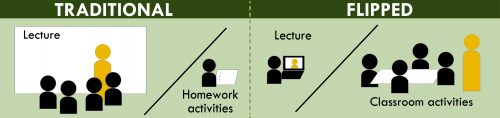
(“Classwork”)

Though we may not realize it, we as teachers encounter this type of multimodal representation on a near daily basis if we utilize any online newspaper or blog of any kind. It may seem frightening to incorporate multimodality into teaching, but we’re certainly no stranger to interacting with this type of display in our free time. John Branch’s highly acclaimed interactive article “Snow Fall: The Avalanche at Tunnel Creek,” published in The New York Times, was a six-part narrative that delivered an all-encompassing exploration of the “February 19, 2012 avalanche that occurred at Tunnel Creek” by incorporating video “interviews with every survivor, the families of the deceased, first responders at Tunnel Creek, officials at Stevens Pass and snow-science experts” and “a computer-generated simulation of the avalanche” alongside more traditional news reporting (Branch). Branch simply could’ve just published an article composed of written explanations of the natural tragedy and interviews with the survivors and experts, but this interactive strategy sought to place readers in the event by presenting them with wholly immersive visual recreations and allowing them the opportunity to hear from those who had suffered right as they read the article itself. Similarly, Andrew Beck Grace crafted an “interactive documentary” to coincide with the five-year anniversary of a tornado that decimated Tuscaloosa, Alabama in 2011; the piece, titled “After the Storm,” was published by The Washington Post and it eschews any written narrative of any kind by simply seeking to capture the authentic experience of living through a tornado via online virtual-reality experiences and highly engaging audiovisual depictions of what sights and sounds one can expect from this natural disaster (Grace). Countless articles have been written about tornadoes, but Grace’s piece is wholly unique unto itself by capturing the sheer terror and devastation associated with such an event thanks to his clever and inventive use of multimodality. Finally, Jeff Himmelman’s “A Game of Shark and Minnow,” also published in The New York Times, seamlessly blends Himmelman’s in-depth coverage of “a geopolitical struggle that will shape the future of the South China Sea” with photography courtesy of Ashley Gilbertson, as this all unfolds in one unbroken narrative (Himmelman). Unlike Branch’s or Grace’s stories, Himmelman’s article is not interactive, but it rather incorporates visuals directly into the story for a reader to come across as they scroll, as opposed to making viewers stop and watch a video or explore a virtual reality experience. Each of these approaches (from Branch’s to Grace’s to Himmelman’s) take extraordinary real-world events and utilize multimodality capabilities to assure that the stories covering these events are as unique and layered as the actual events themselves. 

Just as we consume material like this on a near daily basis, our students do as well. Rather than lamenting about their shorter attention spans or fast-paced attitudes, teachers need to accept that students won’t alter these ingrained patterns; the ball is in our court to find a way to better appeal to them. Not every single lesson requires an interactive component or a visual example, but we should seek to capitalize on what mode students are most comfortable learning from. Luckily, due to the parallelism of multimodality, “if words don’t make sense” at first, “[a] diagram might, and then the words start to make sense” in retrospect (Cope and Kalantzis 364). Just because we start instructing on a topic in a certain mode doesn’t mean we have to stay in that mode for the duration of the lesson; as students come to understand information from one mode, interpreting other modes becomes easier. Though it may be harder for teachers of another generation to transition from the “compelling linearity [of a] traditional page of written text” to embracing the “navigational efforts” required when you interact with choose your own “reading path” on more complex digital resources, the very activities that seem too advanced or complicated for some educators are actually commonplace for students (Cope and Kalantzis 364-365). Rather than forcing students to regress and learn via the ways we were taught, we must progress and tailor our lessons to their needs. In the end, “written language is not going away; it is just becoming more closely intertwined with the other modes,” and we can use this solid foundation to begin our expedition into multimodality (Cope and Kalantzis 365).

When it comes to embracing a multimodal grammar in class, this is a natural progression of education. One does not have to simply ditch written/typed instruction altogether and solely teach with visuals and flashy digital interactive activities. Each mode is not better or worse than the other, and they shouldn’t be used singularly or interchangeably. Rather, “multimodal meaning [represents] the sum of linguistic, visual, spatial, gestural and audio modes of meaning, and it is the process of integration that fully captures “the inherent ‘multiness’ of human expression and perception, or synaesthesia” (Cope and Kalantzis 423). We do not interpret the world in one dimension or via one mode, and it does not make sense to only teach one set way. 

Furthermore, utilizing multimodality in instruction doesn’t mean embracing a whole new teaching style; it simply means achieving the same instructional goals via new means. Teachers who use multimodality in their presentations “still must analyze an audience, choose a purpose, craft rhetorical appeals, and negotiate many of the same decision-making processes required in print-based writing situations”; likewise, “students must invent, draft, revise, and edit when composing a multimodal text just like they do when composing a written essay” (DePalma and Alexander 183). One of the greatest complaints regarding teachers and multimodality lies around the fact that they don’t feel prepared to grade multimodal assignments. Luckily, current rubrics do not have to be upended or tossed out in any capacity; in fact, many teachers assert that they “can use the same rubric during the grading process regardless of if students are being asked to complete a single-mode or multiple-mode assignment” and just add requirements here or there if necessary (DePalma and Alexander 183).

Before requiring multimodal assignments in the classroom, we must better understand our students’ familiarity with the material. Though many of our students are “digital natives” who have “been immersed in technology since their early years”, they may not have been properly prepared to “produce rhetorically sophisticated texts” (DePalma and Alexander 184). Consumption and production are two vastly different activities, and this is always a key distinction one must understand before diving headfirst into multimodal classroom integration. Therefore, teachers must make an effort to gain information and evaluate which “experiences as alphabetic composers might apply to [students’] work as multimodal composers” to format assignments to their special needs (DePalma and Alexander 184). At the end of any day, if multimodal material is becoming too advanced to navigate or too distracting, one should never feel ashamed about diminishing its use either. We should always be making sure that “the methods utilized in composition teaching are those best apt to help students develop and transfer the kinds of literacies they will need to thrive in a range of twenty-first century contexts” first and foremost (DePalma and Alexander 197).

Multimodality may not be the final frontier of technological integration in classrooms, but it is the future of educational instruction, and teachers would be wise to accept and acquaint themselves with this new literacy in order to run the most effective classroom possible.

Works Cited

Branch, John. “Snow Fall: The Avalanche at Tunnel Creek.” The New York Times, The New York Times, 20 December 2012, http://www.nytimes.com/projects/2012/snow-fall/index.html#/?part=tunnel-creek.  

“Classwork 7/5: What is multimodality?” Inquiry and the Craft of Argument, WordPress, 2017, https://rampages.us/univ200szabo/2017/07/05/classwork-75-what-is-multimodality/

Cope, Bill, and Mary Kalantzis. “A Grammar of Multimodality.” The International Journal of Learning, vol. 16, no. 2, 2009, pp. 361-425.

DePalma, Michael J., and Kara P. Alexander. “A Bag Full of Snakes: Negotiating the Challenges of Multimodal Composition..” Computers and Composition, vol. 37, 2015, pp. 182-200.

Grace, Andrew B. “After the Storm.” The Washington Post, The Washington Post, 27 April 2015, http://www.pbs.org/independentlens/interactive/after-the-storm/#/dear-future-disaster-survivor

 Himmelman, Jeff. “A Game of Shark and Minnow.” The New York Times, The New York Times, 27 October 2013, http://www.nytimes.com/newsgraphics/2013/10/27/south-china-sea/index.html.  

Professional Development, Social Media, and Course Management: Integrating Technology in the Classroom and Capitalizing on its Benefits

Ever since the Internet experienced a substantial burst in development and popularity in the mid-90s, our relationships with technology and social networks have drastically evolved, and the profession of education additionally took on a whole new identity. 

While the Internet started as a somewhat niche property, it soon transformed into a massive force to be reckoned with, as demonstrated by the fact that only “18% of families had Internet access in their homes in 1997,” but in 2008, this percentage had “risen to 73%” (Thomas and Brown 41). Within just over 10 years, the percentage of families with Internet access had jumped 55%, and digital connections had started to become a cornerstone of their lives. It was nearly impossible to keep up with all the latest upgrades, as “most [Internet] users owned several different computers, installed or learned multiple operating systems, and [went] through dozens of e-mail clients, web browsers, news readers, and video players” all throughout this time period (Thomas and Brown 41). For example, in the 90s, no one would’ve ever associated the Internet with anything other than a clunky at-home monitor, but now, we carry around devices with broadband Internet capabilities in our pockets at all times in the form of cell phones!

Before long, it was clear that the influence of the Internet could no longer be ignored in any career field. The question then arose: how do we utilize the effective parts of the Internet and subsequently ignore the less useful components in order to maximize its positive impact on our students?

While many initially saw the Internet as a means of digitally transferring information, over time, we have since molded this technology into something we can personally interact with. Simply put, “information technology has become a participatory medium, giving rise to an environment that is constantly being changed and reshaped by the participation itself” (Thomas and Brown 42). It’s quite hard to keep track of all these rapid progressions, and it’d be quite easy to hunker down and combat the change at all costs. However, we as educators shouldn’t look at these advancements as detrimental or overwhelming in the slightest. Technological evolution always brings about new issues, and it requires additional training to navigate, but most of all, it opens up a world full of new opportunities for learning and growth. For starters, “making knowledge stable in a changing world is an unwinnable game,” and the creation of online encyclopedias such as Wikipedia has allowed for digital records that can be altered or added to when new information arises, which is a benefit that old-fashioned print resources do not have (Thomas and Brown 46). Furthermore, anyone can contribute to Wikipedia. Although this may raise a few concerns for educators in regard to the potential proliferation of misinformation, the site does a good job at monitoring contributions, and the extra time afforded to educating students about how to locate and discern credible information from uncredible information is worth it when realizing the plentiful benefits that online, constantly updated encyclopedias provide.

I personally have always had concerns about how to properly employ the use of technology in the classroom, especially with the vast array of resources at my disposal and the potential pitfalls associated with each technological tool. Nevertheless, I have come to adopt the mindset that technology itself is not the enemy – we are. If we let ourselves fall into excessive structure and regiment and neglect our curious, childlike inclinations to toy with new digital developments, we will have failed to engage students who have grown up in a digitized 21st century society. The solution is not to fear and ignore technology, nor is it to simply let students loose on the World Wide Web; in fact, “the challenge is to find a way to marry structure and freedom to create something altogether new” (Thomas and Brown 49).

Making use of flipped classrooms is an example of a technological technique that succinctly marries structure with freedom, as long as these tools are used properly and not mishandled by educators. Flipped classrooms were popularized by Salman Khan of Khan Academy in 2008, and they are used in instructional approaches where teachers “[assign] lectures to [be watched] at home” while students then come to “[work] on homework together in class” (Makice). These videos can work wonders at forcing students to be more accountable for their learning while teachers still assist in guided in-class instruction and oversight of execution on in-class work. However, if a teacher chooses to use flipped classrooms as an instructional approach for a new school year, they cannot simply “structure [their] class exactly the same way [they] have always done”; one needs to be able to adapt to the format of a flipped classroom teaching style, or they will have simply “added an extra hour of class for every hour of class the students [already] has,” thereby “completely disrespecting their time” (Makice). In addition, some experts worry that flipped classrooms may be ineffective overall and actually decrease student engagement, as students are merely forced to absent-mindedly watch a video instead of being mentally present in class. How do we still make use of this valuable technology while combating its weaknesses?

Despite these potential problematic possibilities, Fred Singer, CEO of Echo360 has proposed a broader embrace of what he calls “blended learning,” which “moves beyond simply augmenting face-to-face teaching” and incorporates ways for students to actively participate in video lectures with responses or feedback (Makice). I find the possibilities of “blended learning” to be advantageous and intriguing for teachers of all disciplines, as I already believe flipped classrooms provide students with more flexibility (in taking in lectures on their own time, at their own pace, in their own location), but the additional interactive capabilities proposed by Singer seem designed to authentically replicate the traditional classroom experience in a way that doesn’t breed passivity. Because “humans only retain 10 percent of what we read and 20 percent of what we hear, but comprehend 90 percent of what we say and do,” educational consultant Andrew Miller has supported Singer’s approach, as it provides opportunities for “a variety of instructional models” from “project-or-game-based learning, understanding by design, or authentic literacy” that move flipped classrooms away from mere digital representations of class lectures and into digital experiences of interplay with learning materials (Makice).

By setting up a professional Twitter account, you can discover another way to meet students on a level playing field and boost your knowledge of classroom technological integration tactics outside of flipped classrooms. As silly as it sounds (and believe me, I hesitated at first too), professional Twitter accounts provide teachers with innumerable benefits when it comes to networking and connecting with others in the field. Because it’s easy to get left behind on the plethora of technological advancements that seem to occur every day, Twitter “edubloggers” help keep all teachers on board with the updates of the digital “learning revolution,” and these tweeters can also supply useful, instant information about recent developments in the world of education as a whole (Boss). Now, yes, some accounts can be bogged down by extraneous, non-education-related material. However, if you can tune that chatter out, the accounts that avoid those distractions end up directly and solely relaying helpful content about teaching, and they prove to be easy-to-reach resources when it comes to understanding how to specifically implement new digital programs and activities in lesson plans such as “podcasts, blogs, wikis, and more” (Boss).  In order to stay on top of the latest and greatest teaching strategies to engage the 21st century learners in your classroom, it’s imperative that you join social networking in some way or another.

When it comes to interacting with others on Twitter, this task can seem quite daunting at first. This is where Twitter chats come in. Twitter chats “provide educators with classroom-tested lessons, a variety of perspectives on specific problems, or an introduction to emerging technologies,” and they often “focus on just the topic you need” (Fingal). Subscribing to or following a distinctive Twitter chat eliminates much of the time one might waste scouring the entirety of the Twitter app for useful teaching information. To begin, it’s important that one “picks [their] angle,” as “some chats, such as #edchat, tackle a broad range of education issues, while others are based on shared interests in a particular topic, content area, grade level, job type, or geographic region” (Fingal). In my eyes, I believe teachers should subscribe to at least one broad Twitter chat to receive the most basic education and technological news and at least one content area Twitter chat, so that they can receive news about digitization that directly corresponds to their subject matter. The presence of Twitter chats allows teachers a clear and easy entry point to the overwhelming vastness of the Twitter-sphere, and the relationships one forms within these chats will prove to be continually beneficial when it comes to constantly finding new ways to evolve your instruction.

Aside from simply acquainting oneself with technological knowledge, teachers finally also need to work at understanding how their students specifically present themselves online and why in order to properly instruct on digital literacy alongside technological integration. Self-presentation is a challenge for anyone of any age, but it’s particularly difficult for teens who are attempting “to understand how context, audience, and identity” interact in what they post (Boyd 30). We commonly underestimate the ways that teens relay specific content on social media platforms for a specific audience, and this causes us to subsequently make generalizations about a young individual’s personality based on one negative or questionable post. Although “teens often imagine their audience to be those that they’ve chosen to ‘friend’ or ‘follow’,” it’s impossible to fully control “who can see their profile, who actually does see it, and how those who do see it will interpret it,” and they need to be aware of this (Boyd 32). This is different from in-person conversations, in which teens can more expediently switch discussion topics or end interactions if they don’t want someone to hear something; social network posts are available to almost anyone at any time, and those reactions can’t be regulated. It’s wonderful that technology has allowed adolescents to “move quickly between different social settings” and “interact with different groups of friends, interest groups, and classmates” thanks to the diversification of social networking, but some simply lack the proper maturity and capability to effectively manage these separate identities simultaneously until assistance (or punishment) arises (Boyd 41). Since many classrooms now incorporate the use of plentiful technology (as I have also detailed the importance and benefits of above), it is essential that teachers also help guide students through identity work through different contexts and social media platforms. For individuals that have grown up in the digital age, social media has become a form of expression of sorts, and it’s a valuable experience for sure, but as we place more technological tools at our students’ disposal, we must make sure not to leave them high and dry either.

Technology isn’t going anywhere, and it’s overwhelming presence in our lives will only increase as the digital world grows and expands in the coming years. While tech provides plenty of new learning opportunities for teachers (such as the ever-popular “flipped classroom” instructional approach), we have to make sure to both stay on top of the possibilities of digitization and guide our students through this messy, murky environment as well in order to achieve greater professional and educational success for all.

Works Cited

Boss, Suzie. “Twittering, Not Frittering: Professional Development in 140 Characters.” Edutopia, George Lucas Educational Foundation, 13 August 2008, https://www.edutopia.org/twitter-professional-development-technology-microblogging

Boyd, Danah. “Identity: Why Do Teens Seem Strange Online?” It’s Complicated: The Social Lives of Networked Teens. London: Yale University Press, 2014. 29-52. Print.

Fingal, Diana. “40 education Twitter chats worth your time.” ISTE, International Society for Technology in Education, 16 January 2018, https://www.iste.org/explore/Professional-development/40-education-Twitter-chats-worth-your-time?articleid=7

Makice, Kevin. “Flipping the Classroom Requires More Than Video.” Wired, Condé Nast, 12 April 2013, https://www.wired.com/2012/04/flipping-the-classroom/

Thomas, Douglas, and John S. Brown. “Embracing Change.” A New Culture of Learning: Cultivating the Imagination for a World of Constant Change, Scotts Valley: CreateSpace, 2011, 39-49. Print.

University of Washington. “Flipping the classroom.” University of Washington, University of Washington, 2019.

Ethics, Plagiarism, and Pedagogy: The Methods to Consider When Educating Students on Both How and Why to Avoid Falsified Work

Plagiarism is a complex, multifaceted problem that continues to plague students of all ages as they routinely engage in this behavior from class to class either intentionally or unintentionally. As a teacher, it can be maddening and upsetting to be constantly confronted with this issue and forced to report students for this unacceptable behavior. In both cases of intentional and unintentional plagiarism, the solution to remedy these transgressions is two-fold, but we must begin by first further educating our students on the intricacies of fair use and copyright law and inform them on the legal dangers of these wrongdoings. The Internet is only getting more expansive, and as the “ethical responsibilities required by these complex environments” get murkier, it is up to us to direct students on how to easily “manage, analyze, and synthesize multiple streams of information” without running the risk of breaking the law (“The NCTE Definition”). However, as teachers have attempted to guide their students through the complicated terrain of media literacy, they too have run into plentiful governmental roadblocks, causing them to question just how to approach this material when so much helpful information is so strongly guarded. How do we teach students the methods to avoiding the pitfalls of plagiarism when we ourselves don’t fully grasp how to approach and incorporate outside information in instruction due to rapidly changing and confusing laws?

This uncertainty causes teachers to either “close their classroom doors and hide what they fear is infringement” by teaching the information anyway or “hyper-comply with imagined rules that are far stricter than the law requires” and deliver an inadequate lesson in the long run (“Code of Best Practices”). Luckily, we as teachers have a wonderfully intricate resource in the Code for Best Practices in Fair Use Media Literacy Education, which provides guidelines for using copyrighted material in classroom activities from teacher preparation/presentation to student projects. For the most part, these guidelines establish that fair use affords a considerable amount of freedom to teachers looking to teach copyrighted material in class, incorporate it into curriculum plans, or share with fellow educators. Of course, it is imperative that we still continue to “choose material that is germane to the project or topic,” only use “what is necessary for the educational goal or purpose for which it is being made,” and “provide attribution for quoted material” in order to be as safe and secure as possible, but for the most part, many worries are commonly over exaggerated (“Code of Best Practices”).

Since we are simply presenting material and oftentimes not attempting to pass off adapted existing intellectual property as our own work, teachers don’t face nearly the same amount of scrutiny as students do. For any student to understand media literacy, they have to dig through information and mold it to suit their own needs appropriately, but this comes with significant considerations. According to the Code for Best Practices in Fair Use Media Literacy Education, students must meet the “transformativeness standard,” in which they are able to prove that they have “repurposed or transformed” a copyrighted text into an original work (“Code for Best Practices”). Unfortunately, we cannot be with students every step of the way throughout their educational journey to monitor their incorporation of information in their personal assignments. How do we ensure that they come away from our classes understanding how much quoted/paraphrased material is too much? This is a question that has haunted me ever since I was in school, and honestly, as a future English teacher, it terrifies me to admit that there is truly no clear answer. Simply put, there are no “cut-and-dried” rules for fair use, as it is a “situational” standard where “context is critical” (“Code for Best Practices”). In my eyes, it is therefore most imperative that we help students view these outside sources as simply supplemental material and encourage them to let their own original voice and thought guide their work. By sharing the knowledge that we too have to adhere to and emphasizing how attribution isn’t always a valid excuse for greatly borrowing from another individual’s work, we can help our students gain the same knowledge of media literacy that we possess and push them to become stronger critical thinkers and consumers of media.

Some teachers have used the potential danger of this copyright minefield as an excuse to shy away from more tech-based lectures or assignments, as a few of mine had when I was in high school. However, this is detrimental when educating students who are “Digital Natives,” or students that have grown up entirely entrenched in the “digital language of computers, video games, and the Internet”; these individuals have been conditioned to “think and process information fundamentally differently from” past generations and their education cannot neglect the impact of unique upbringing (Prensky 1). As incoming teachers around my age progressed through the K-12 education track, we continually encountered these “Digital Immigrant” teachers, who did not grow up with the capabilities of the Internet and therefore struggled to adapt to the fast-paced sensibilities and multi-task tendencies of their “Digital Native” students (Prensky 2). Ignoring these differences and continuing to teach subjects the way they’ve always been taught is not the way to solve this “culture” divide. In fact, this method entirely disregards the massive opportunity present for taking advantage of students’ overall familiarity with mass media and adding a structure to their already non-stop consumption of digital information. Our students are on the Internet 24/7 as they consume and repurpose information on the fly; it is our responsibility to meet them on even ground and teach them how to refine their technological tendencies when applying their preexisting knowledge to schoolwork. Fortunately, as millennial teacher candidates (such as ourselves) enter the professional world, I have faith that we will be able to better arrange class assignments and lectures around our students’ pre-existing intimacy with technology and use this relationship as a strength rather than an impediment.

Now, all of this knowledge is great for providing students with more resources and instruction on how to avoid plagiarism, but one question still stands: how do we get them to care about avoiding plagiarism?

Although a lack of knowledge on what does or does not count as plagiarism has contributed to plenty a plagiarized report, some students are actually adequately aware of their actions and stroll on ahead regardless, whether it be due to a frustration over continual low grades or a simple lack of time required to ethically complete an assignment. With “77 percent of students [reporting that] Internet plagiarism is ‘not a serious issue’,” it’s crystal clear that there is a disconnect between students and teachers over the issue even with the more complex class discussions proposed at the beginning of this post (Gilmore 107). Schools can try to combat this behavior with stark punishments, honor codes, and mandatory essay submissions to turnitin.com, but the problem still persists even in spite of these measures. Many teachers associate plagiaristic tendencies with lower-performing students, but in fact, “a 1998 survey by Who’s Who Among American High School Students revealed that 80 percent of the ‘best of the nation’s 16-to-18 year olds cheated in order to rise to the top’,” revealing that higher-achieving students are not immune to the influence of cheating, especially as schools have moved to focus on extrinsic rewards for high grades such as “honor rolls, grade-oriented assemblies, and other public displays of academic achievement” (Gilmore 109). While I think that these rewards are certainly important to recognize the students who go above and beyond in their studies, the competitive atmosphere that many schools and colleges have bred in their efforts to project the best student body data possible seems to have had a negative impact on student mentalities as well.

In order to combat the mindsets of students who are aware of their illegal plagiaristic activities and persist regardless, I propose that we must promote a classroom atmosphere of what I call “ethical empathy”. Placing students in the shoes of those who have been plagiarized and making them face the grave reality of having one’s work stolen and repackaged as another individual’s original property is vital to helping them to understand the crux of the pain of plagiarism. Because our experiences with the Internet are so often very singular and isolated, “questions of community, responsibility to others, and binding norms of conduct [often] fade into the background,” contributing to an overall disposition of apathy towards the creators of the content we consume (Townley and Parsell 271). When you also consider the fact that plagiarism is easier today than it’s ever been before (with the proliferation of digital resources), it’s apparent that students must have a continually reaffirmed internal moral compass that guides them away from these quick fixes. Simply trying to deter students from plagiarism based on the threat of penalty and punishment “does not cultivate trust nor does it encourage an appreciation of or disposition to intellectual integrity” (Townley and Parsell 276). In conjunction with these clearly established expectations, we as teachers have to work to better reframe the act of plagiarism as something ethically incorrect.

As a future educator myself, I will do my part in providing an empathetic exploration of plagiarism alongside the thorough media literacy lessons I detailed above. In my lesson plans, I would include a thoughtful discussion that delves further into avoiding plagiarism not as a way to avoid being labeled a “delinquent”, but as a way to show respect for those we are gaining research from. Furthermore, I want my future students to feel a sense of trust from their teacher, and I will work to establish this common ground with them upfront. We may not be able to do away with the looming ghoul of turnitin.com, but I want my students to feel that I still believe in their ability to create authentic, original work, and if they happened to disobey this trust, that would be a greater offense than any official school discipline.

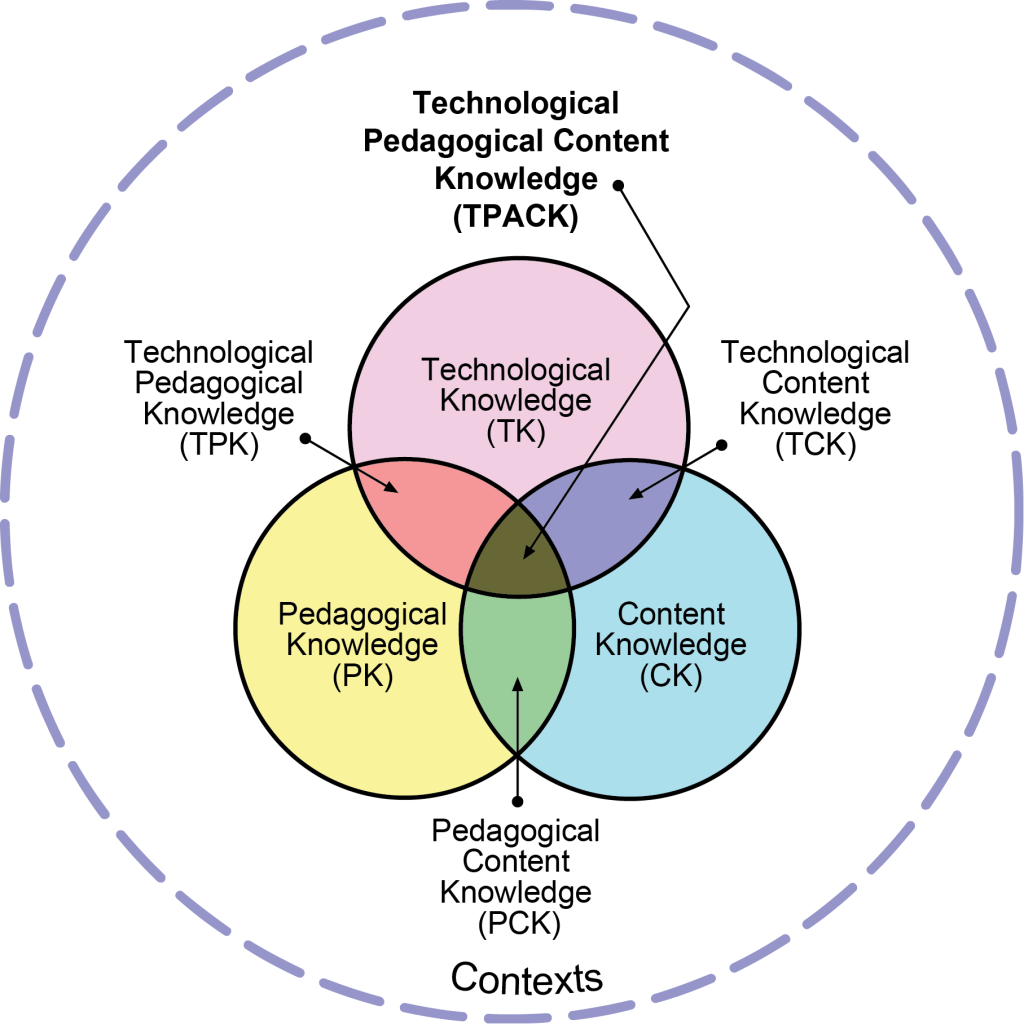
Now, this type of education requires a significant handle on the TPACK framework, or technological pedagogical content knowledge, which “is an understanding that emerges from interactions among content, pedagogy, and technology knowledge” (Koehler and Mishra 66). Basically, in this day and age, since it is impossible to separate technology from the classroom, teachers cannot simply view their knowledge of class content, teaching methods, and technological capabilities as separate entities; we must find a way to combine all of this understanding and delve deeper into the material than ever before. It is not enough to merely educate students about media literacy and call it a day. It is not enough to simply instruct students on what plagiarism is and how to avoid it. With TPACK, we can strive to do better and give our students a concrete and complete moral enlightenment that gives them a reason to respect the subject matter of the class and the technology at their constant disposal.

Plagiarism will continue to plague classrooms for the near future, and I fear that it is a problem that is impossible to eradicate entirely. Nevertheless, with teachers educated in fair use and copyright law who meticulously relay information regarding media literacy to their students and provide an deeper ethical understanding to this material, I believe we have a shot at better combating this menace.

Works Cited

“Code of Best Practices in Fair Use for Media Literacy Education.” National Council of Teachers of English, 2018, http://www2.ncte.org/statement/fairusemedialiteracy/. Accessed 1 Sep 2019.

Gilmore, Barry. “Write From Wrong.” Independent School, vol. 69, no. 3, Spring 2010, pp. 106-113.

Koehler, Matthew J. “TPACK Image.” TPACK.org, Matthew J. Koehler, 24 Sep 2012.

Koehler, Matthew J., and Punya Mishra. “What Is Technological Pedagogical Content Knowledge?” Contemporary Issues in Technology and Teacher Education, vol. 9, no. 1, pp. 60-70.

“The NCTE Definition of 21st Century Literacies.” National Council of Teachers of English, 2013, http://www2.ncte.org/statement/21stcentdefinition/

Prensky, Marc. “Digital Natives, Digital Immigrants.” MCB University Press, vol. 9, no. 5, Oct. 2001, pp. 1-6

Townley, Cynthia, and Mitch Parsell. “Technology and academic virtue: Student plagiarism through the looking glass.” Ethics and Information Technology, vol. 6, 2004, pp. 271-277

Welcome!

Hello there! Welcome to my personal education blog for the Fall 2019 semester of Teaching and Learning in Digital Environments at the University of Nebraska Omaha! Throughout the course, I will be using this blog to post my thoughts on various topics and articles we are assigned to discuss, and I look forward to engaging with my classmates in this material! Here’s to a great semester!

Design a site like this with WordPress.com
Get started