Plagiarism is a complex, multifaceted problem that continues to plague students of all ages as they routinely engage in this behavior from class to class either intentionally or unintentionally. As a teacher, it can be maddening and upsetting to be constantly confronted with this issue and forced to report students for this unacceptable behavior. In both cases of intentional and unintentional plagiarism, the solution to remedy these transgressions is two-fold, but we must begin by first further educating our students on the intricacies of fair use and copyright law and inform them on the legal dangers of these wrongdoings. The Internet is only getting more expansive, and as the “ethical responsibilities required by these complex environments” get murkier, it is up to us to direct students on how to easily “manage, analyze, and synthesize multiple streams of information” without running the risk of breaking the law (“The NCTE Definition”). However, as teachers have attempted to guide their students through the complicated terrain of media literacy, they too have run into plentiful governmental roadblocks, causing them to question just how to approach this material when so much helpful information is so strongly guarded. How do we teach students the methods to avoiding the pitfalls of plagiarism when we ourselves don’t fully grasp how to approach and incorporate outside information in instruction due to rapidly changing and confusing laws?
This uncertainty causes teachers to either “close their classroom doors and hide what they fear is infringement” by teaching the information anyway or “hyper-comply with imagined rules that are far stricter than the law requires” and deliver an inadequate lesson in the long run (“Code of Best Practices”). Luckily, we as teachers have a wonderfully intricate resource in the Code for Best Practices in Fair Use Media Literacy Education, which provides guidelines for using copyrighted material in classroom activities from teacher preparation/presentation to student projects. For the most part, these guidelines establish that fair use affords a considerable amount of freedom to teachers looking to teach copyrighted material in class, incorporate it into curriculum plans, or share with fellow educators. Of course, it is imperative that we still continue to “choose material that is germane to the project or topic,” only use “what is necessary for the educational goal or purpose for which it is being made,” and “provide attribution for quoted material” in order to be as safe and secure as possible, but for the most part, many worries are commonly over exaggerated (“Code of Best Practices”).
Since we are simply presenting material and oftentimes not attempting to pass off adapted existing intellectual property as our own work, teachers don’t face nearly the same amount of scrutiny as students do. For any student to understand media literacy, they have to dig through information and mold it to suit their own needs appropriately, but this comes with significant considerations. According to the Code for Best Practices in Fair Use Media Literacy Education, students must meet the “transformativeness standard,” in which they are able to prove that they have “repurposed or transformed” a copyrighted text into an original work (“Code for Best Practices”). Unfortunately, we cannot be with students every step of the way throughout their educational journey to monitor their incorporation of information in their personal assignments. How do we ensure that they come away from our classes understanding how much quoted/paraphrased material is too much? This is a question that has haunted me ever since I was in school, and honestly, as a future English teacher, it terrifies me to admit that there is truly no clear answer. Simply put, there are no “cut-and-dried” rules for fair use, as it is a “situational” standard where “context is critical” (“Code for Best Practices”). In my eyes, it is therefore most imperative that we help students view these outside sources as simply supplemental material and encourage them to let their own original voice and thought guide their work. By sharing the knowledge that we too have to adhere to and emphasizing how attribution isn’t always a valid excuse for greatly borrowing from another individual’s work, we can help our students gain the same knowledge of media literacy that we possess and push them to become stronger critical thinkers and consumers of media.
Some teachers have used the potential danger of this copyright minefield as an excuse to shy away from more tech-based lectures or assignments, as a few of mine had when I was in high school. However, this is detrimental when educating students who are “Digital Natives,” or students that have grown up entirely entrenched in the “digital language of computers, video games, and the Internet”; these individuals have been conditioned to “think and process information fundamentally differently from” past generations and their education cannot neglect the impact of unique upbringing (Prensky 1). As incoming teachers around my age progressed through the K-12 education track, we continually encountered these “Digital Immigrant” teachers, who did not grow up with the capabilities of the Internet and therefore struggled to adapt to the fast-paced sensibilities and multi-task tendencies of their “Digital Native” students (Prensky 2). Ignoring these differences and continuing to teach subjects the way they’ve always been taught is not the way to solve this “culture” divide. In fact, this method entirely disregards the massive opportunity present for taking advantage of students’ overall familiarity with mass media and adding a structure to their already non-stop consumption of digital information. Our students are on the Internet 24/7 as they consume and repurpose information on the fly; it is our responsibility to meet them on even ground and teach them how to refine their technological tendencies when applying their preexisting knowledge to schoolwork. Fortunately, as millennial teacher candidates (such as ourselves) enter the professional world, I have faith that we will be able to better arrange class assignments and lectures around our students’ pre-existing intimacy with technology and use this relationship as a strength rather than an impediment.
Now, all of this knowledge is great for providing students with more resources and instruction on how to avoid plagiarism, but one question still stands: how do we get them to care about avoiding plagiarism?
Although a lack of knowledge on what does or does not count as plagiarism has contributed to plenty a plagiarized report, some students are actually adequately aware of their actions and stroll on ahead regardless, whether it be due to a frustration over continual low grades or a simple lack of time required to ethically complete an assignment. With “77 percent of students [reporting that] Internet plagiarism is ‘not a serious issue’,” it’s crystal clear that there is a disconnect between students and teachers over the issue even with the more complex class discussions proposed at the beginning of this post (Gilmore 107). Schools can try to combat this behavior with stark punishments, honor codes, and mandatory essay submissions to turnitin.com, but the problem still persists even in spite of these measures. Many teachers associate plagiaristic tendencies with lower-performing students, but in fact, “a 1998 survey by Who’s Who Among American High School Students revealed that 80 percent of the ‘best of the nation’s 16-to-18 year olds cheated in order to rise to the top’,” revealing that higher-achieving students are not immune to the influence of cheating, especially as schools have moved to focus on extrinsic rewards for high grades such as “honor rolls, grade-oriented assemblies, and other public displays of academic achievement” (Gilmore 109). While I think that these rewards are certainly important to recognize the students who go above and beyond in their studies, the competitive atmosphere that many schools and colleges have bred in their efforts to project the best student body data possible seems to have had a negative impact on student mentalities as well.
In order to combat the mindsets of students who are aware of their illegal plagiaristic activities and persist regardless, I propose that we must promote a classroom atmosphere of what I call “ethical empathy”. Placing students in the shoes of those who have been plagiarized and making them face the grave reality of having one’s work stolen and repackaged as another individual’s original property is vital to helping them to understand the crux of the pain of plagiarism. Because our experiences with the Internet are so often very singular and isolated, “questions of community, responsibility to others, and binding norms of conduct [often] fade into the background,” contributing to an overall disposition of apathy towards the creators of the content we consume (Townley and Parsell 271). When you also consider the fact that plagiarism is easier today than it’s ever been before (with the proliferation of digital resources), it’s apparent that students must have a continually reaffirmed internal moral compass that guides them away from these quick fixes. Simply trying to deter students from plagiarism based on the threat of penalty and punishment “does not cultivate trust nor does it encourage an appreciation of or disposition to intellectual integrity” (Townley and Parsell 276). In conjunction with these clearly established expectations, we as teachers have to work to better reframe the act of plagiarism as something ethically incorrect.
As a future educator myself, I will do my part in providing an empathetic exploration of plagiarism alongside the thorough media literacy lessons I detailed above. In my lesson plans, I would include a thoughtful discussion that delves further into avoiding plagiarism not as a way to avoid being labeled a “delinquent”, but as a way to show respect for those we are gaining research from. Furthermore, I want my future students to feel a sense of trust from their teacher, and I will work to establish this common ground with them upfront. We may not be able to do away with the looming ghoul of turnitin.com, but I want my students to feel that I still believe in their ability to create authentic, original work, and if they happened to disobey this trust, that would be a greater offense than any official school discipline.
Now, this type of education requires a significant handle on the TPACK framework, or technological pedagogical content knowledge, which “is an understanding that emerges from interactions among content, pedagogy, and technology knowledge” (Koehler and Mishra 66). Basically, in this day and age, since it is impossible to separate technology from the classroom, teachers cannot simply view their knowledge of class content, teaching methods, and technological capabilities as separate entities; we must find a way to combine all of this understanding and delve deeper into the material than ever before. It is not enough to merely educate students about media literacy and call it a day. It is not enough to simply instruct students on what plagiarism is and how to avoid it. With TPACK, we can strive to do better and give our students a concrete and complete moral enlightenment that gives them a reason to respect the subject matter of the class and the technology at their constant disposal.
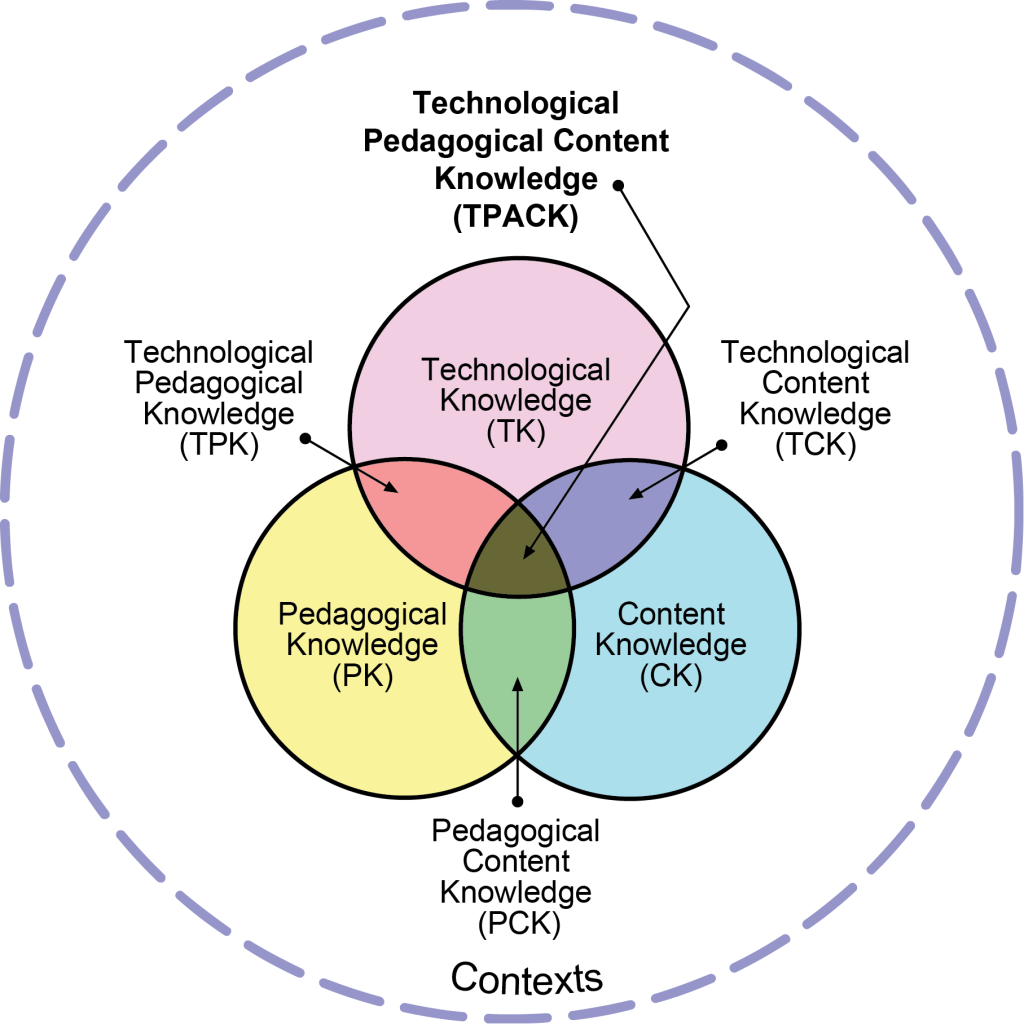
Plagiarism will continue to plague classrooms for the near future, and I fear that it is a problem that is impossible to eradicate entirely. Nevertheless, with teachers educated in fair use and copyright law who meticulously relay information regarding media literacy to their students and provide an deeper ethical understanding to this material, I believe we have a shot at better combating this menace.
Works Cited
“Code of Best Practices in Fair Use for Media Literacy Education.” National Council of Teachers of English, 2018, http://www2.ncte.org/statement/fairusemedialiteracy/. Accessed 1 Sep 2019.
Gilmore, Barry. “Write From Wrong.” Independent School, vol. 69, no. 3, Spring 2010, pp. 106-113.
Koehler, Matthew J. “TPACK Image.” TPACK.org, Matthew J. Koehler, 24 Sep 2012.
Koehler, Matthew J., and Punya Mishra. “What Is Technological Pedagogical Content Knowledge?” Contemporary Issues in Technology and Teacher Education, vol. 9, no. 1, pp. 60-70.
“The NCTE Definition of 21st Century Literacies.” National Council of Teachers of English, 2013, http://www2.ncte.org/statement/21stcentdefinition/
Prensky, Marc. “Digital Natives, Digital Immigrants.” MCB University Press, vol. 9, no. 5, Oct. 2001, pp. 1-6
Townley, Cynthia, and Mitch Parsell. “Technology and academic virtue: Student plagiarism through the looking glass.” Ethics and Information Technology, vol. 6, 2004, pp. 271-277
 Zach Gilbert